
Cincinnatus, Farmer Dictator
A messenger finds him knee-deep in his own field, hands thick with soil. Rome has been invaded—and the Senate demands Lucius Quinctius Cincinnatus drop his plow and take command.
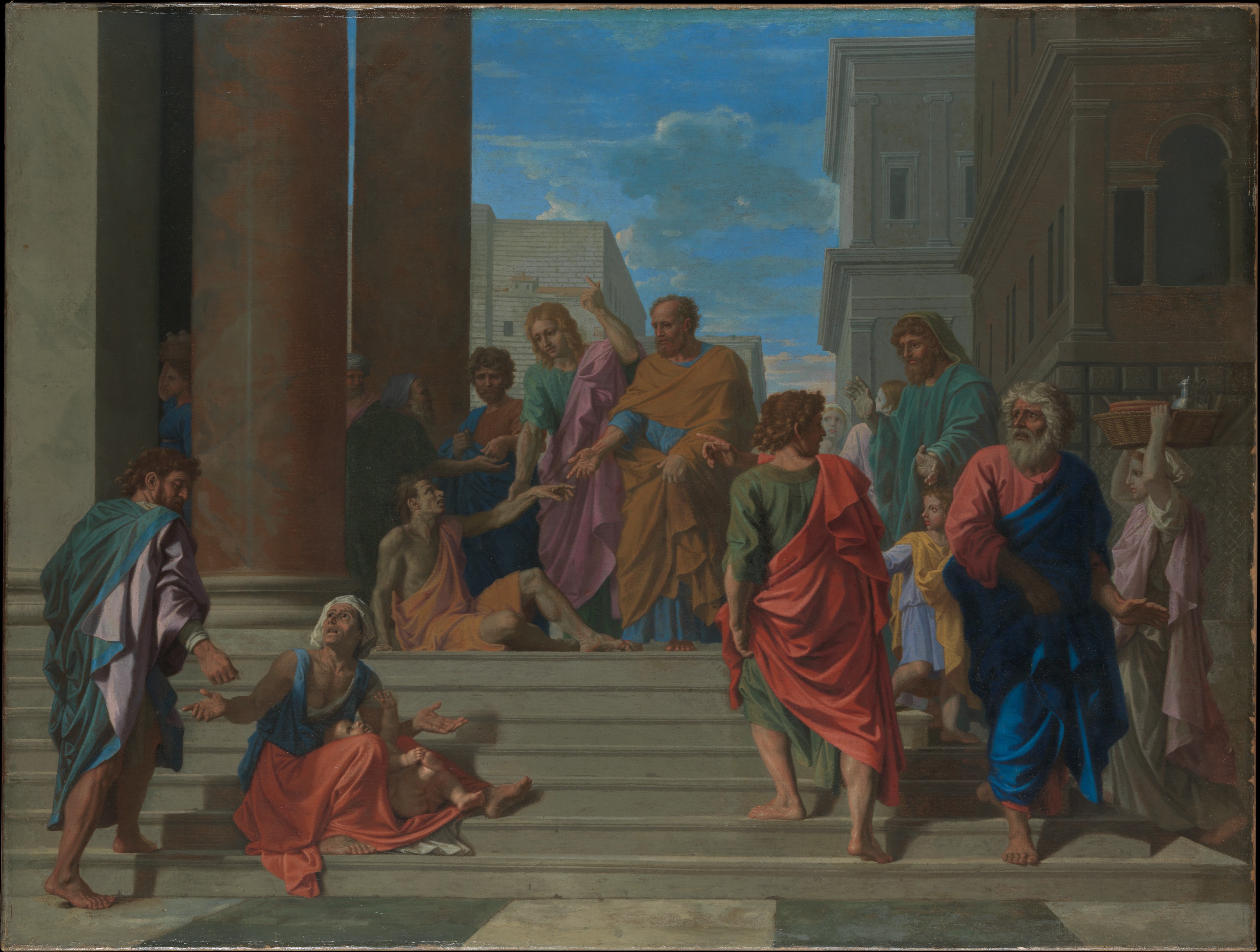
Nicolas Poussin — "Saints Peter and John Healing the Lame Man" (1655), public domain
A Farmer, Summoned to Save Rome
A messenger finds Cincinnatus at the plow, sweat streaking his arms. Rome is desperate—only he can stop the enemy at the gates. He leaves his field without even stopping to wash his hands.
Absolute Power, Briefly Held
The Senate grants him the title of dictator—emergency power with no questions asked. Cincinnatus rallies the ragged citizens, routs the invaders, and restores order in barely two weeks. Then he simply steps down, refusing reward or lifelong power.
The Leader Who Walked Away
Romans never forgot the man who traded a crown for a hoe. Centuries later, his name is still invoked as the gold standard—a ruler who knew when to let go.
He saves Rome in sixteen days, defeats the enemy, and resigns absolute power to return to his crops. No triumph, no palace—just a silent walk home. In a city terrified of kings, Cincinnatus becomes the model for a leader who rules only when needed, and walks away craving nothing.
