
Cato the Younger: The Ledger of Death
Cato the Younger staged his own death like a legal proceeding. Even in suicide, he called for witnesses and cited the law.
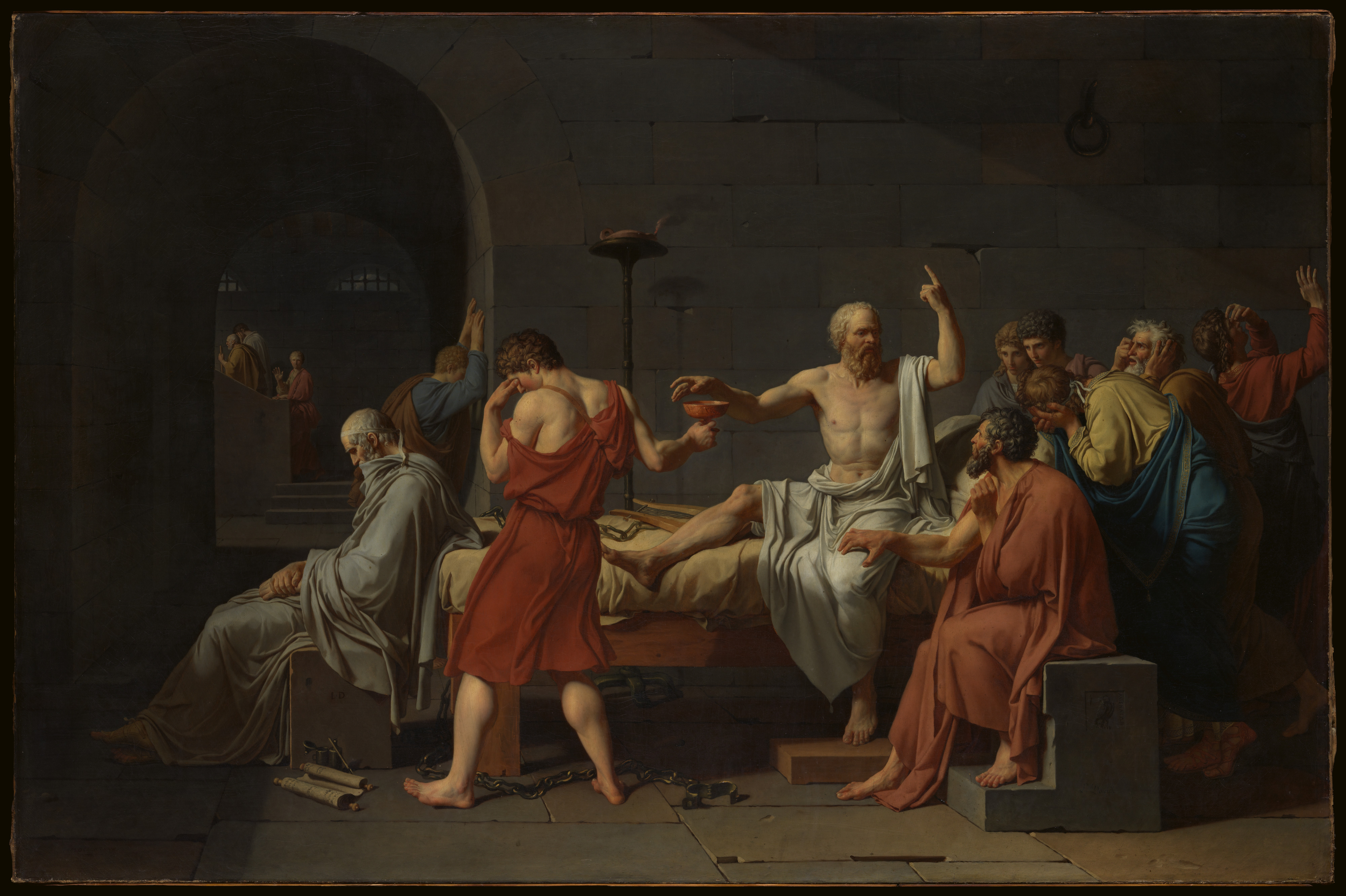
Jacques Louis David — "The Death of Socrates" (1787), public domain
Death as a Final Argument
Cato the Younger staged his suicide like a public trial. He summoned friends, dismissed help, and demanded that his death follow Roman legal custom—his last act of resistance against Julius Caesar’s dictatorship.
Unbreakable Principles
Cato stood for the old Republic, even as Rome’s world tilted toward dictatorship. When trapped in Utica with Caesar’s legions closing in, he read Plato on the soul and showed no fear. Refusing to live under a tyrant, he chose a death the Senate couldn’t erase.
A Model—Or Warning?
To some Romans, Cato became a symbol of integrity. To others, he was stubborn to the point of ruin. His death fueled centuries of debate: When does standing firm become a vice, not a virtue?
Cato’s rigid devotion to republican ideals didn’t bend—not even for his own life. As Caesar closed in, Cato read Plato, then stabbed himself and, when found alive, finished the job with his own hands. He refused medical help. Roman sources say he wanted his death to be public and unmistakable, as if signing off on his moral account as a citizen.
