
Cato’s Last Stand at Utica
As Caesar’s armies closed in, Cato locked himself in his room and calmly read secret letters by firelight.
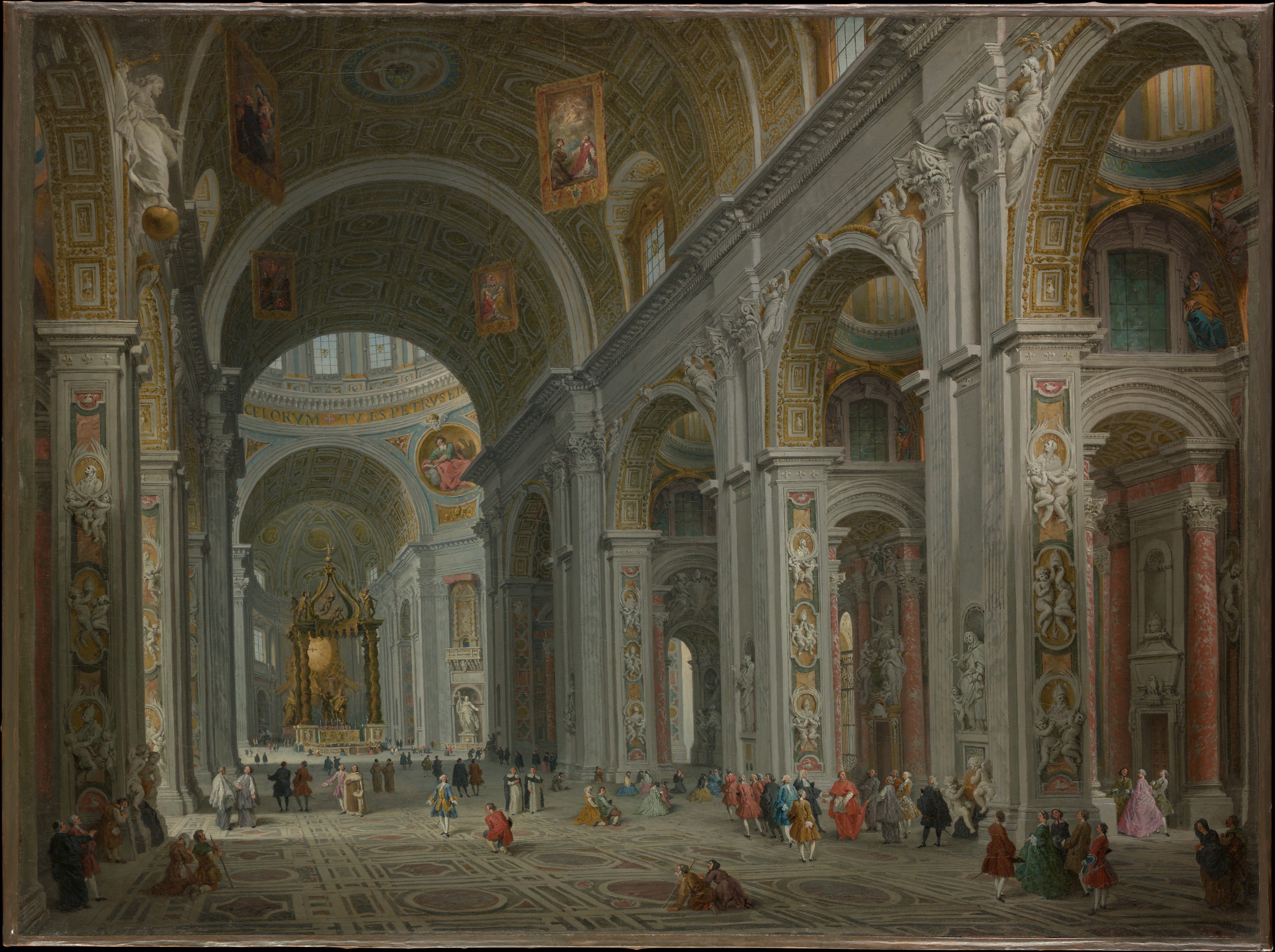
Panini — "Interior of Saint Peter's, Rome" (after 1754), public domain
Cato by Lamplight.
After Caesar’s victory at Thapsus, Cato retreated to Utica. In the night, he shut himself in with a stack of correspondence—letters between Rome’s senators, evidence of resistance. He read each one, then tossed it into the fire, erasing the record as the flames flickered in the dark.
A Choice of Freedom—or Death.
With Caesar’s men at the city gates, Cato made his decision. Unwilling to live under a dictator, he fell on his sword. The wound didn’t kill him immediately—he stitched it up, lay back, and waited until the end finally took him. Plutarch wrote that not even Caesar could bend Cato.
A Republic’s Final Breath.
Cato’s suicide became the rallying cry for Roman republicans—proof that some would rather die free than bend the knee. Even his enemies couldn’t help but respect the stubborn, almost theatrical, defiance.
Faced with defeat, Cato destroyed the evidence of desperate alliances—then chose his own end, refusing to live under Caesar.
