
Cassandra and the Fall of Troy
As flames devour Troy, one woman screams the truth—no one listens.
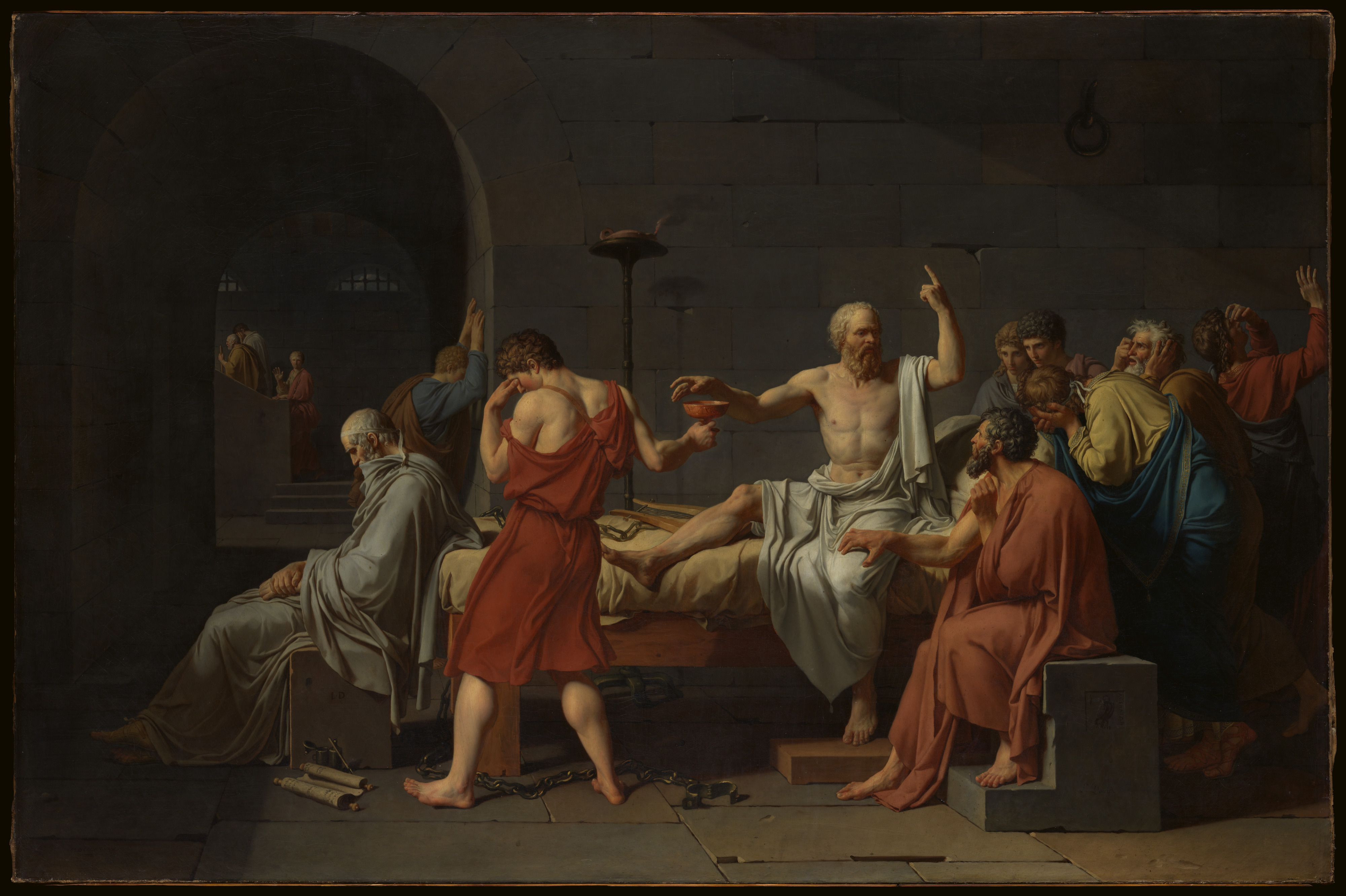
David — "The Death of Socrates" (1787), public domain
The curse of unwanted truth.
Cassandra stands at the city gates, hair tangled, eyes wild. She begs the Trojans not to bring the wooden horse inside. The guards laugh, shrug, and roll it through the gates. She tears at her clothes, cursing Apollo—the god who gave her the gift of prophecy, and the curse that no one would ever believe her.
A prophecy ignored, a city doomed.
All night, Cassandra wails as Greek soldiers pour out of the horse and open the city’s gates. Her warnings echo in empty halls, drowned by fire and slaughter. Homer never names her directly, but later poets paint Cassandra as the woman who saw it all coming—and watched her city burn for it.
The agony of being right too soon.
Cassandra’s story lingers because her gift is useless without trust. In every age, the cursed prophet walks among us—unheard, unheeded, and heartbreakingly right.
Cassandra warned her people about the Greeks in the horse, but Apollo’s curse guaranteed no one would ever believe her—making her one of history’s most tragic seers.
