
Were Greek Tragedy Actors All Men in Stone Masks?
You picture Greek tragedies on stage: stone-faced actors, all male, hidden behind heavy masks, declaiming in booming voices.
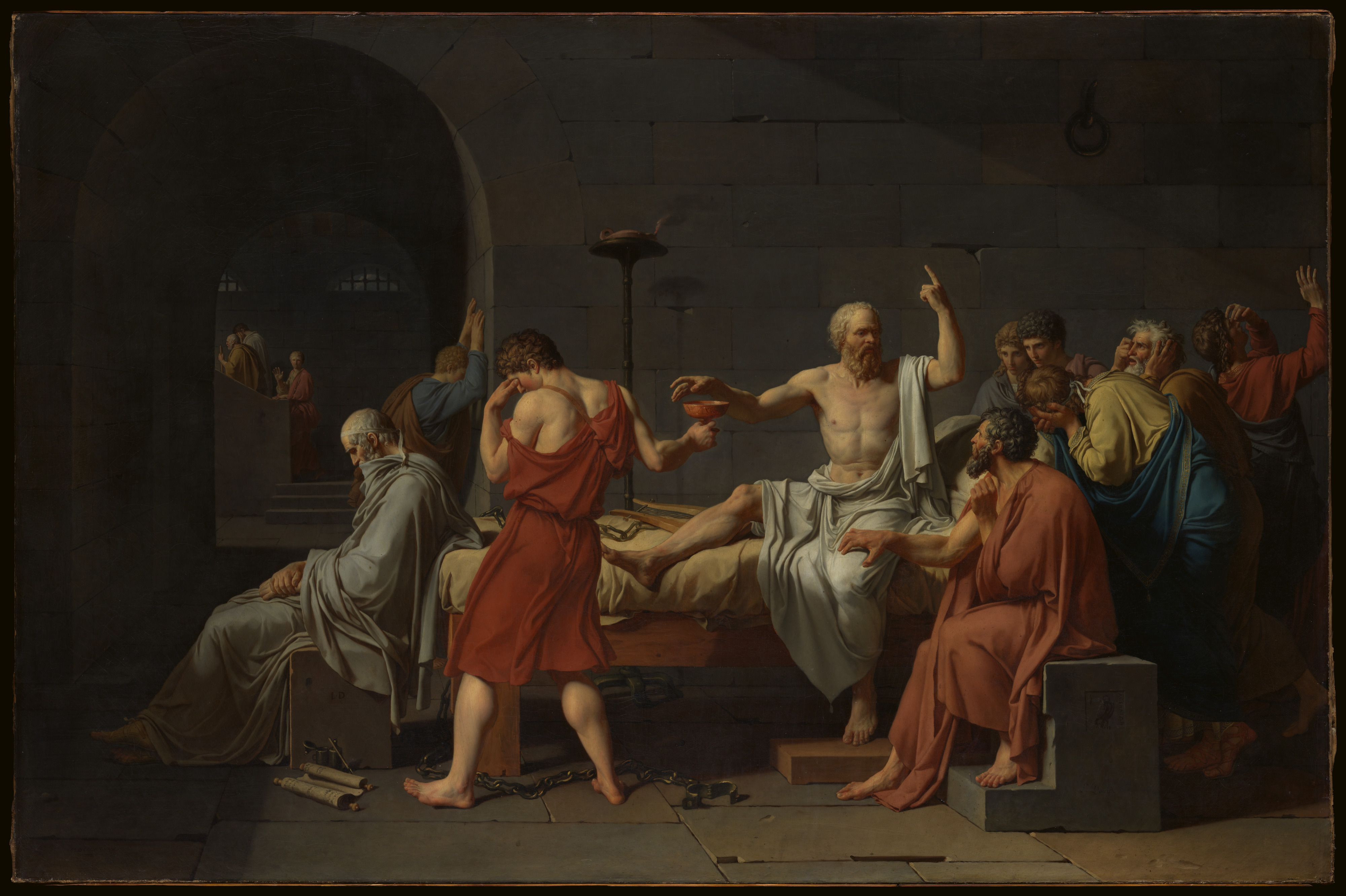
David — "The Death of Socrates" (1787), public domain
The all-stone, all-male myth.
You probably imagine Greek tragedies performed by men in heavy stone masks, frozen in one expression, declaiming every line from behind a rigid face. No women, just a chorus of identical, unblinking statues on stage.
Linen, paint, and living faces.
Real Greek masks were made of painted linen and sometimes wood, designed to be expressive and lightweight. They were colored with bold pigments—reds, blacks, whites—and often topped with real hair or wigs. Actors, always men, could swap masks quickly, each one a different character or emotion.
Statues supplied the myth.
Roman and later European artists sculpted marble theater masks, which museums put on display. Over time, people mistook these art pieces for the real thing. The ancient audience didn’t see stone—they saw color, movement, and a riot of faces alive with feeling.
Greek tragedy used lightweight linen masks, not stone, and while actors were exclusively male, their masks were painted with vivid colors and sometimes even wigs. The result was a living gallery, not a parade of statues.
