
On This Day: Athena Parthenos Unveiled
Mid-July, 438 BCE: In blazing Athenian sun, the new Athena Parthenos glints for the first time—gold and ivory, fifteen meters high.
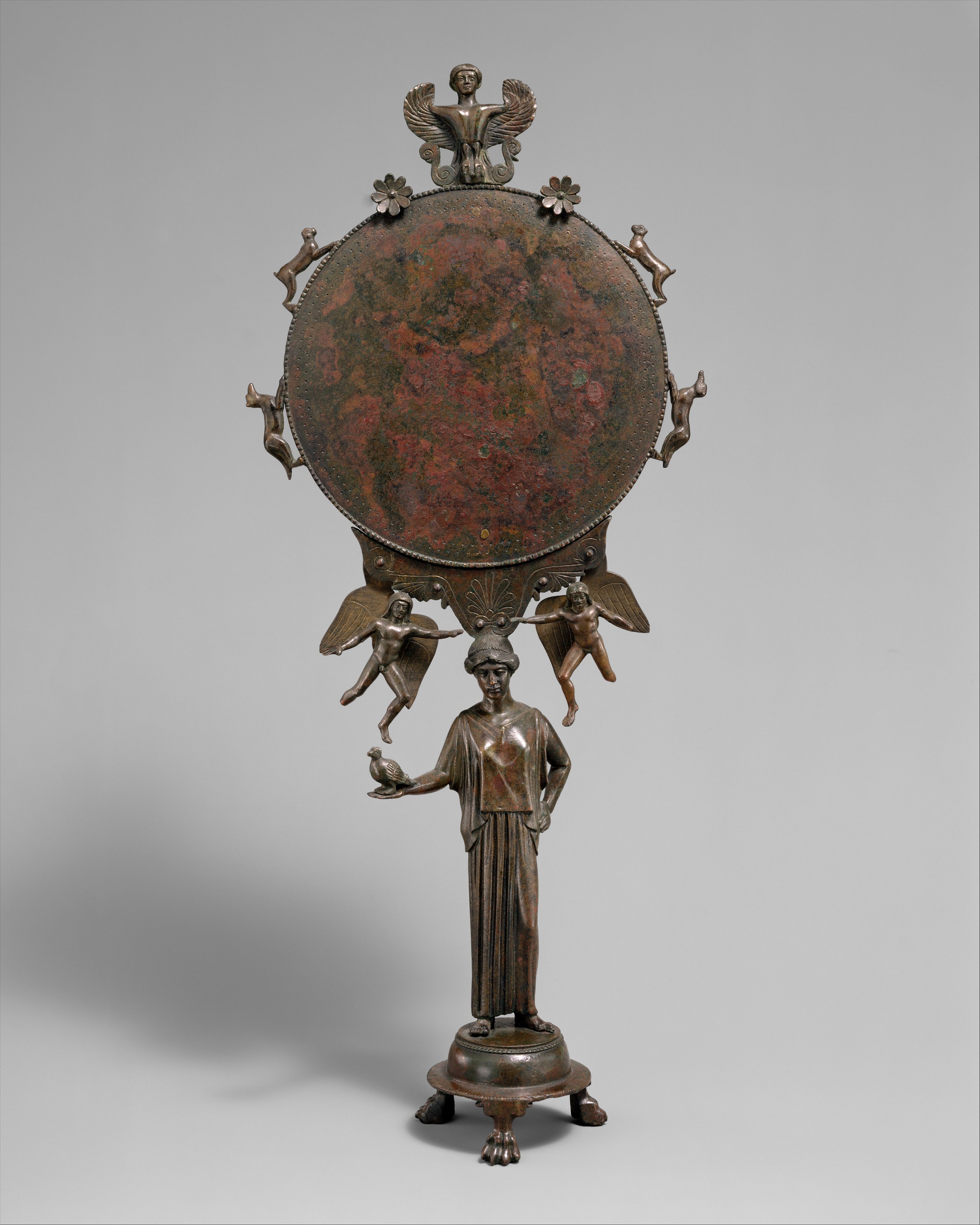
Unknown — "Bronze mirror with a support in the form of a draped woman" (mid-5th century BCE), public domain
A goddess towers over Athens.
The Parthenon’s inner chamber is unveiled. There stands Athena Parthenos—over forty feet tall, gleaming with gold plates and ivory skin. She grips shield and spear. Citizens crane their necks, staring up at the city’s protector in all her impossible splendor.
Wealth in every gleaming inch.
Phidias and his team poured more than a ton of gold into her robes. Ancient sources claim the gold could be stripped off in crisis—Athens’s fortune literally clad on the goddess. The statue’s unveiling marks a new peak of civic pride, and perhaps a bit of hubris.
Athens’ glory, gilded and immortal.
No sculpture in Greece rivaled her scale or ambition. Centuries later, her echo stirs in every image of a city reaching for the divine.
Phidias’s masterpiece stuns the city. More than a statue, Athena Parthenos is Athens made visible—wealth, power, and piety fused in one colossal form.
