
Aristotle on Habits and Bravery
"We become brave by doing brave acts." — Aristotle, more coach than mystic, turns virtue into muscle memory.
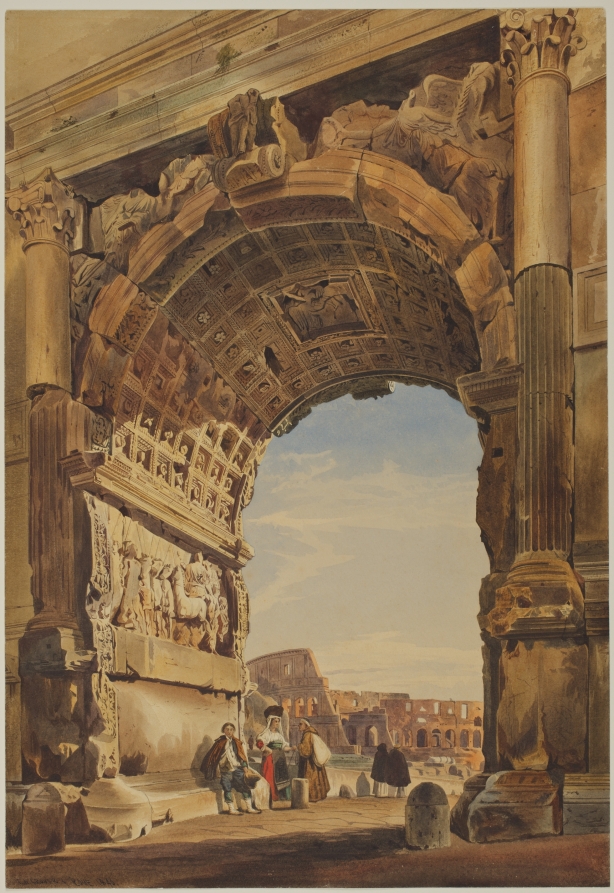
Thomas Hartley Cromek (British, 1809–1873) — "The Arch of Titus and the Coliseum, Rome" (1846), CC0
Aristotle’s rules for heroes.
In Nicomachean Ethics, Book II, Aristotle writes: «οἱ δὲ ἐπαναλαμβάνοντες τὰ ἀνδρεῖα ἔργα ἀνδρεῖοι γίγνονται.» — "By performing brave acts, men become brave." Virtue here isn’t a feeling. It’s a drill.
What did Aristotle mean?
Aristotle taught that excellence is habit. Courage, justice, even self-control—they don’t come from nature, but from practice. Each small, repeated action forges character. Do enough brave things, and you wake up one day as the person you aspired to be.
The father of habits.
Aristotle walked the groves of Athens, teaching future leaders with lists, not riddles. He believed the good life was less about flashes of inspiration, more about showing up every day. That’s why his line lands, even now, in every locker room and classroom.
For Aristotle, you’re not born good. You become what you train daily. Character is repetition, not birthright.
