
Aristophanes and Women's Power
"Let women manage the city!" — Aristophanes, Ecclesiazusae, has women stage a radical coup in comedy, but the laughter bites.
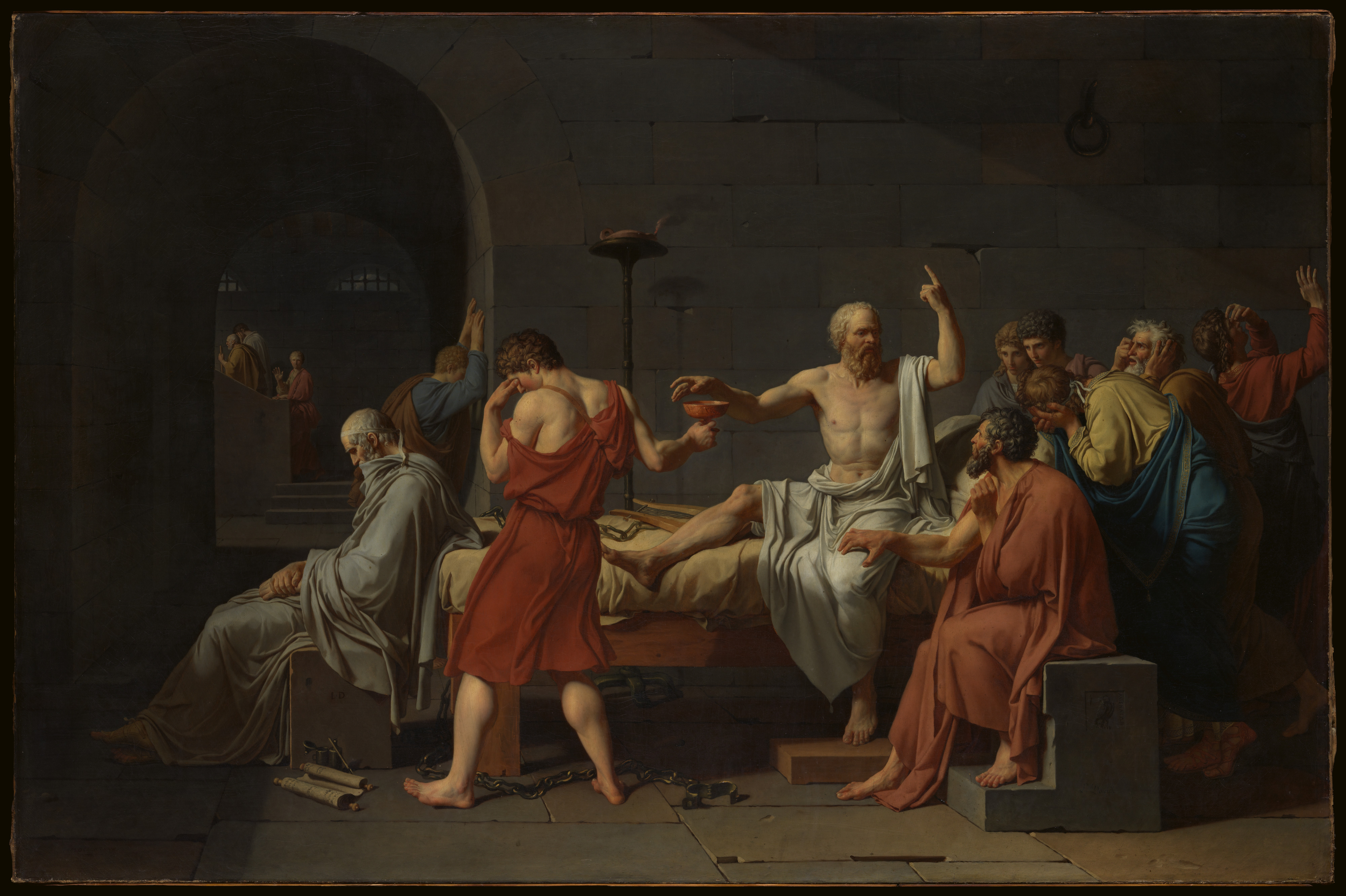
Jacques Louis David — "The Death of Socrates" (1787), public domain
Comedy becomes proposal.
In 392 BC, Aristophanes' play Ecclesiazusae put the line 'Let women manage the city!' in the mouths of Athenian wives. Through disguise and cunning, they seize the Assembly. Athens laughs, but the joke stings: it imagines a world upside-down—yet oddly functional.
Laughing at, or with, women?
Male audiences were meant to scoff at female rule, but Aristophanes makes his heroines absurdly competent. The play punctures Athenian fears about democracy's future and women's voices. Satire, in his hands, is a tool for asking who really should hold power.
In Ecclesiazusae, Aristophanes let his female characters take over the Athenian assembly—satirizing, but also spotlighting anxieties about changing gender and political roles.
