
Aristophanes, Jester With Teeth
Clouds of incense hang in the theater, and Aristophanes steps onto the Athenian stage—mocking generals, politicians, even the gods, as his rivals clutch their togas tighter.
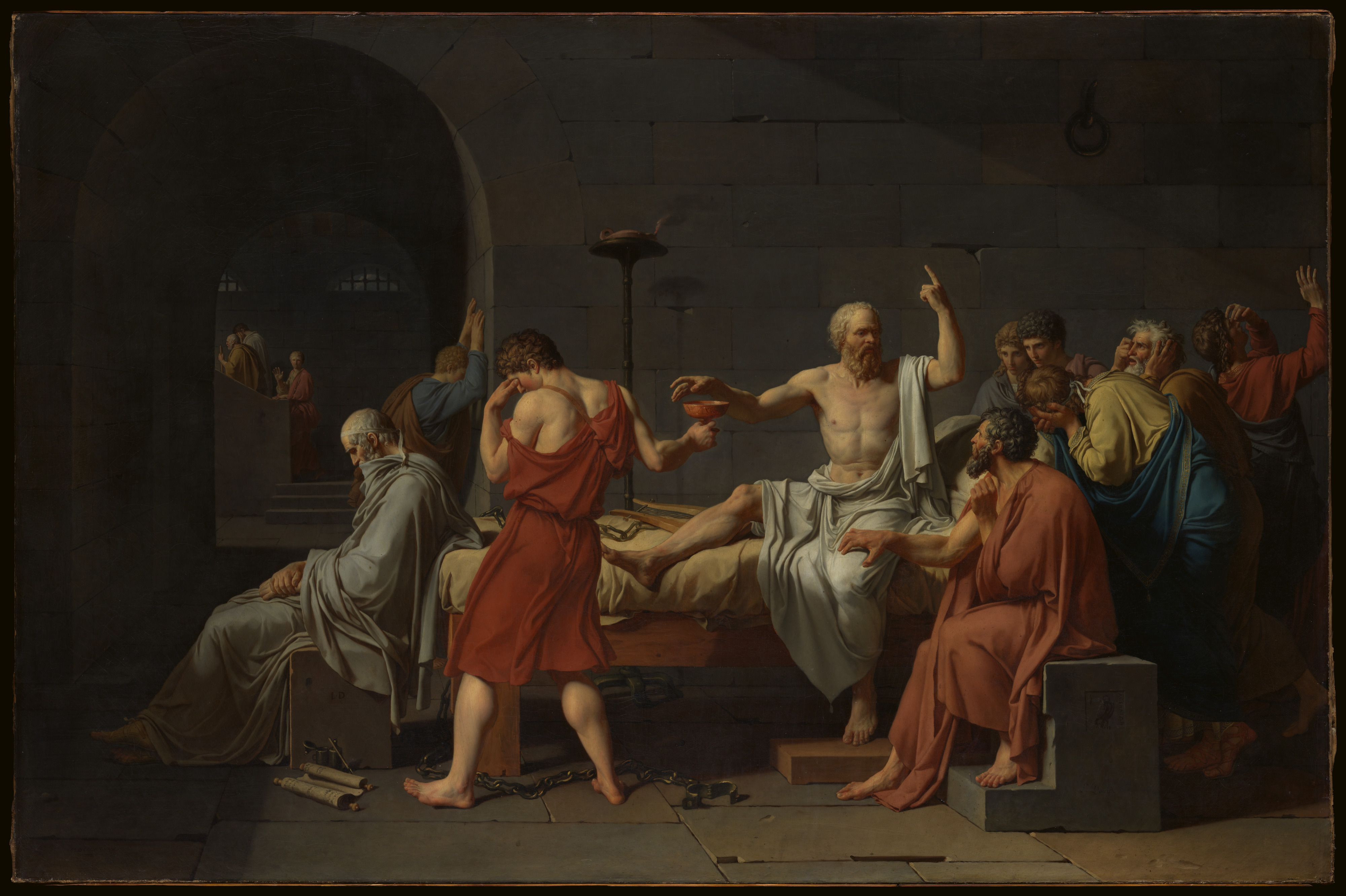
David — "The Death of Socrates" (1787), public domain
Laughter as Rebellion
Clouds of incense hang in the theater, and Aristophanes steps onto the Athenian stage—mocking generals, politicians, even the gods, as his rivals clutch their togas tighter.
Satire With Real Consequences
To laugh at power when everyone else fears it takes nerve, not just wit. Aristophanes hurls satire at the most sacred targets, with the city’s leaders forced to watch from the front row. He is sued, threatened, even physically attacked—and keeps writing.
Legacy of Mockery
In every regime—democratic, tyrannical, or somewhere muddy in between—the person brave enough to joke in public is risking more than laughter. Aristophanes made that danger into an art form.
To laugh at power when everyone else fears it takes nerve, not just wit. Aristophanes hurls satire at the most sacred targets, with the city’s leaders forced to watch from the front row. He is sued, threatened, even physically attacked—and keeps writing.
