
Did All Ancient Greeks Have Dark Hair?
Think every ancient Greek had olive skin and jet-black hair? Art and poetry tell a different story.
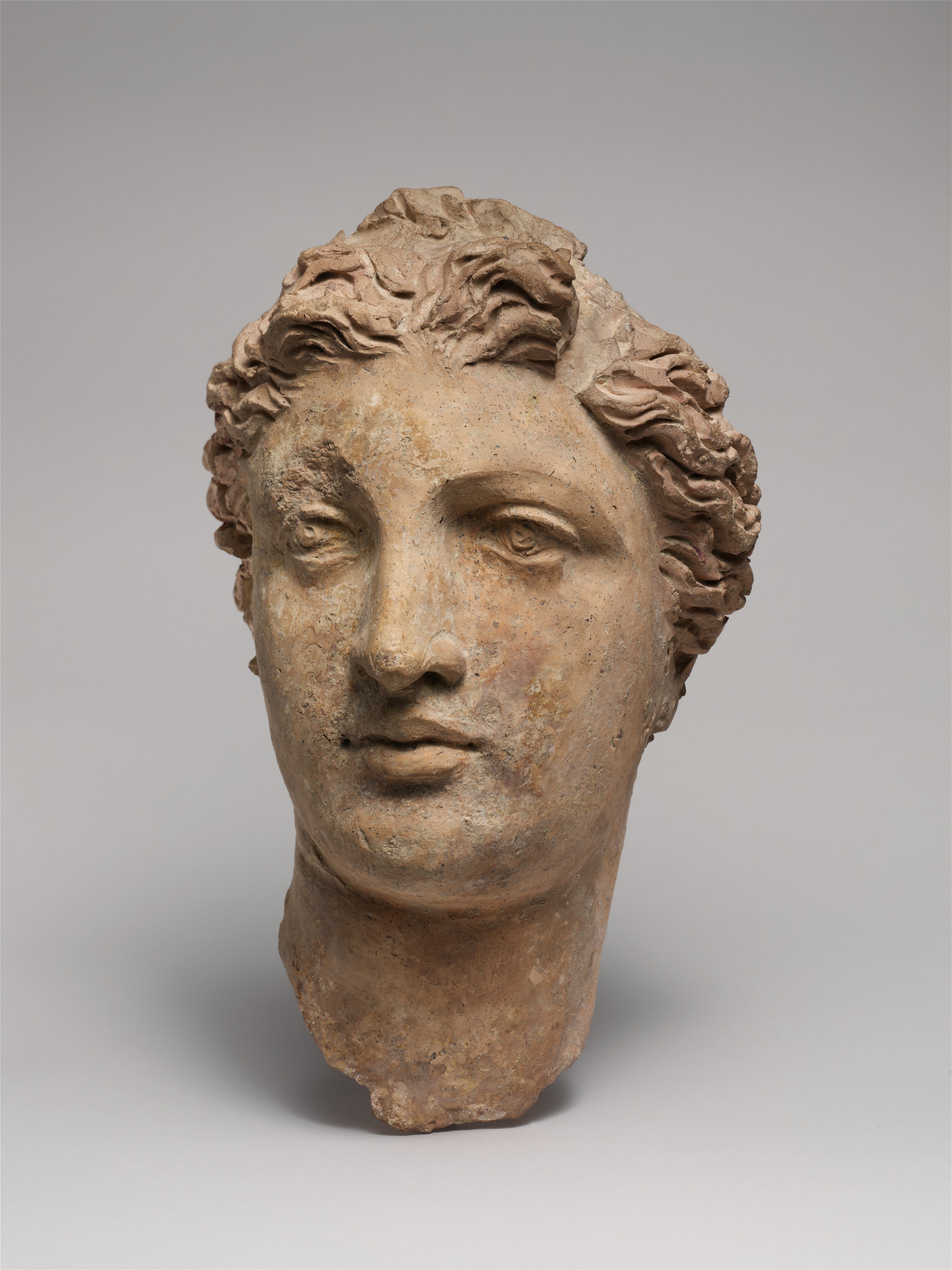
Unknown — "Terracotta head of a woman" (3rd–2nd century BCE), public domain
The Mediterranean look—set in stone?
Pop culture gives us one image: ancient Greeks with olive skin and raven hair. Even textbooks and movies repeat it. But did everyone from Athens to Sparta really match the stereotype?
Blondes, redheads—and social gossip.
Greek poets described Achilles as 'golden-haired.' Athenian women used saffron dye to lighten their hair. The philosopher Theophrastus even cataloged regional hair colors, noting fair and auburn heads. In painted portraits—like those from Ptolemaic Egypt—you’ll spot red beards and pale ringlets. Classical beauty was more varied than you’d think.
Where did the stereotype come from?
Nineteenth-century painters and early archaeologists helped cement the 'dark Greek' image, partly by projecting their own ideas of the 'Mediterranean race.' Ancient writers, by contrast, saw blondness as rare and sometimes divine—and didn't confine beauty to one palette.
Descriptions and painted portraits reveal Greeks with a surprising range of hair colors—blond, red, even auburn. These variations held social meaning and fascinated their own writers.
