
Pericles, the Plague, and a Funeral
While the plague ravaged Athens, Pericles stood before mourners—masking his own despair with words of hope.
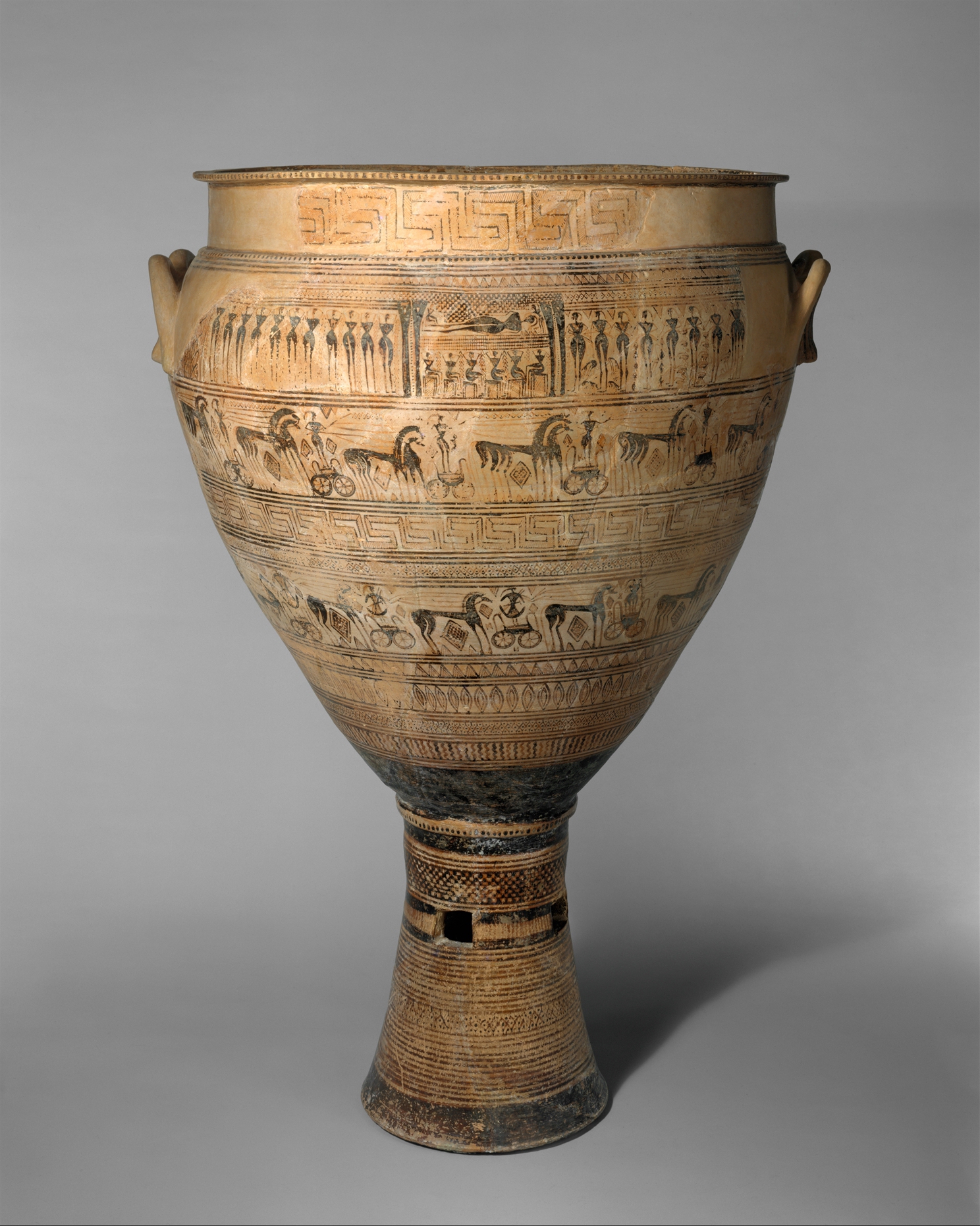
Trachones Workshop — "Terracotta krater" (ca. 725 BCE), public domain
Plague and oration.
The plague crept through Athens, leaving bodies stacked in streets and temples. In 430 BC, Pericles stood before the city’s dead—tasked with inspiring a crowd that had lost sons, fathers, neighbors.
Words against darkness.
Thucydides records Pericles' speech, a blend of praise and defiance. He called Athens 'the school of Hellas,' refusing to let fear define the city, though even his own sons would soon die of the sickness.
After the words, only silence.
The plague killed a quarter of the city—including Pericles, not long after his speech. His words survived. Most of those who heard them did not.
In the shadow of mass death, Pericles delivered his famous Funeral Oration, insisting on Athenian greatness even as he watched the city—and his own family—fall to the plague.
