
Caesar's Dying Words: Not 'Et tu, Brute?'
Every movie has Caesar gasping, 'Et tu, Brute?' as the knives go in. That's pure Shakespeare, not ancient history.
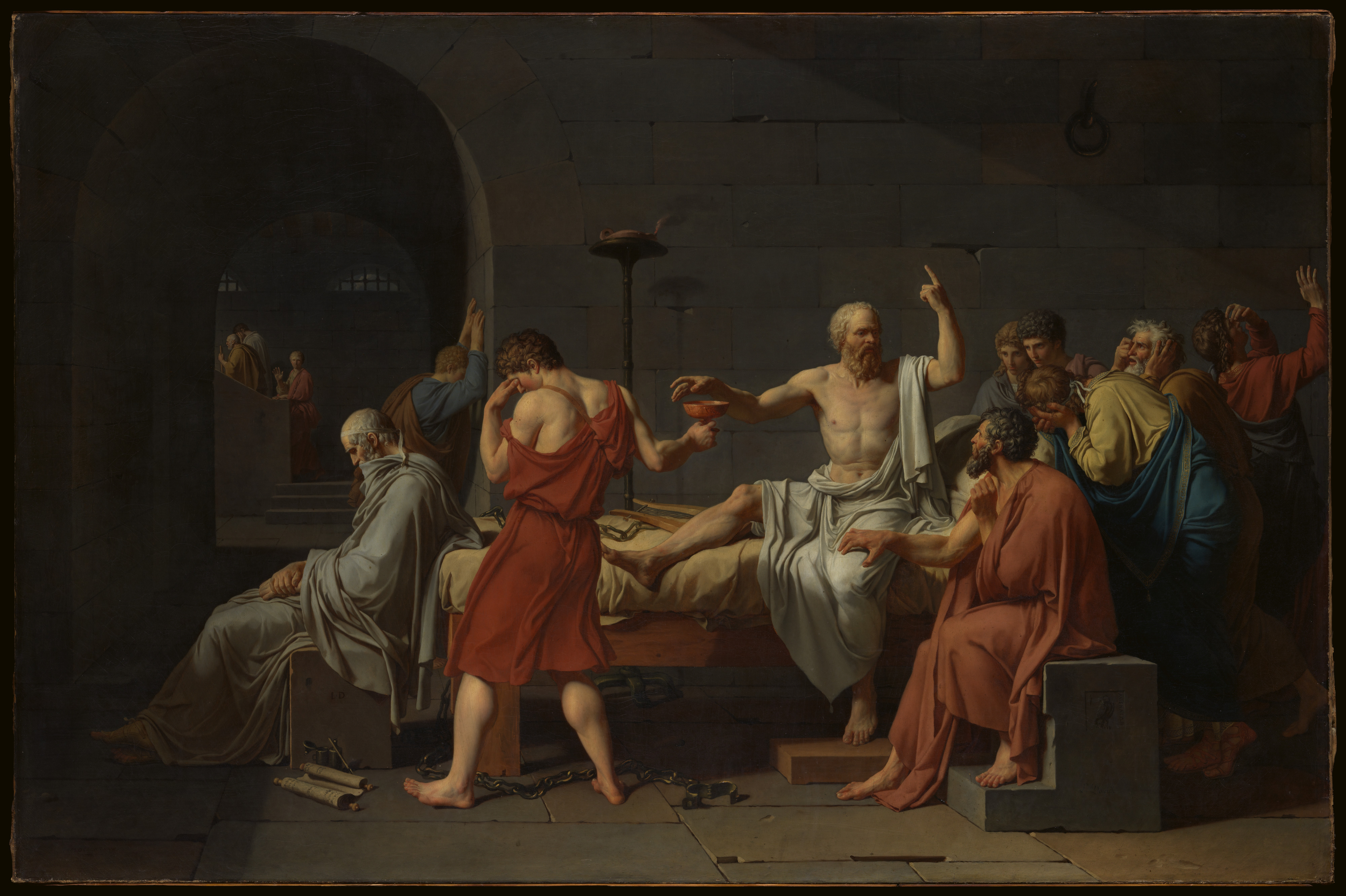
Jacques Louis David — "The Death of Socrates" (1787), public domain
The myth of Caesar's last words.
Picture the scene: knives flash, Caesar staggers—'Et tu, Brute?' he whispers, heartbroken. It's the death scene everyone knows, from Hollywood to high school textbooks. But Caesar never said it—at least, not according to any ancient source.
What did Caesar really say?
Suetonius claims Caesar died in silence, just pulling his toga over his face. Plutarch reports he may have muttered 'You too, my child?' in Greek ('Kai su, teknon?'), but even that is uncertain. The famous Latin phrase was penned by Shakespeare, imagining drama that ancient writers never recorded.
A line born in the theatre.
'Et tu, Brute?' first appears in Shakespeare’s Julius Caesar (1599), not Roman history. Later, the phrase snowballed into legend. We remember Shakespeare’s drama—not the messy chaos of the Senate floor.
Ancient sources give different—and sometimes chilling—final words for Caesar. The iconic line that echoes through pop culture? It was written over 1,600 years later.
