
The Siege of Alesia
Caesar built a wall around Vercingetorix’s army—then built another one around himself.
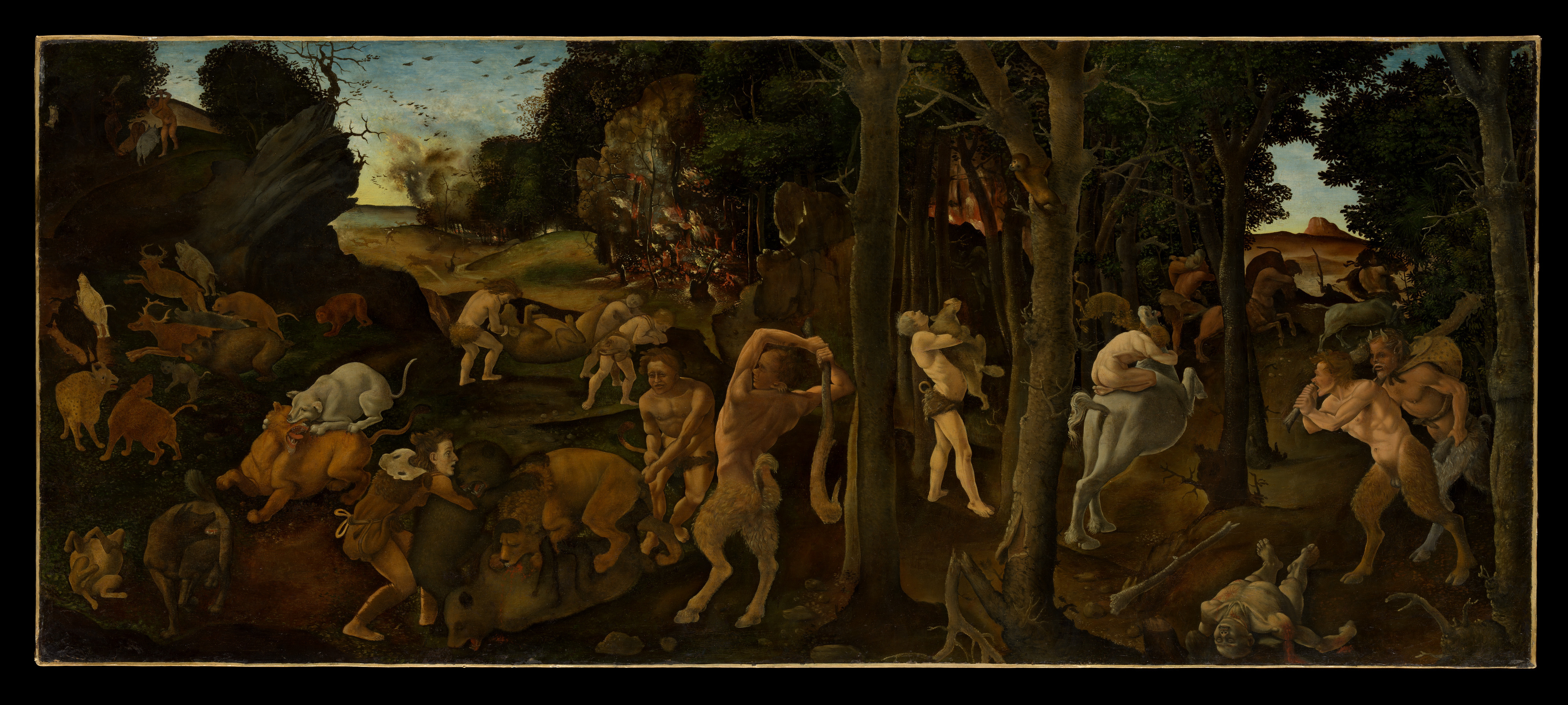
Piero di Cosimo (Piero di Lorenzo di Piero d'Antonio) — "A Hunting Scene" (ca. 1494–1500), public domain
Two armies, two walls.
52 BCE: The Gallic chieftain Vercingetorix is trapped in the hill fortress of Alesia. Julius Caesar’s answer? Build a 10-mile wall to trap Vercingetorix’s 80,000 warriors. Then, as the rest of Gaul rushes to break the siege, Caesar orders a second wall—this one to keep the rescuers out. The Romans are trapped in the space between.
Starvation, desperation, and a gamble.
Inside, food runs out. Outside, Gallic reinforcements swarm. The Romans are outnumbered—at points, 4 to 1. Caesar rides all night, patching weak spots, rallying his men. According to his own commentaries, defeat seemed certain. Then, in a last all-or-nothing attack, the Romans repulse their enemies. Gaul’s resistance breaks, and Vercingetorix surrenders.
Freedom, lost in the mud.
Vercingetorix rides out in full armor and lays his sword at Caesar’s feet. He spends six years as a prisoner before a final parade in Rome—then execution. One man’s gamble, two circles of dirt, and a continent’s fate sealed in a muddy field.
Under pressure from a massive relief army, Caesar trapped both his enemies and himself inside circles of earth and wood. A risky gamble that nearly cost him everything—and crushed Gaul’s last hope of freedom.
