
The Burning of the Library of Alexandria
Flames licked the scrolls of the greatest library on earth—while Julius Caesar’s legionaries fought for their lives outside.
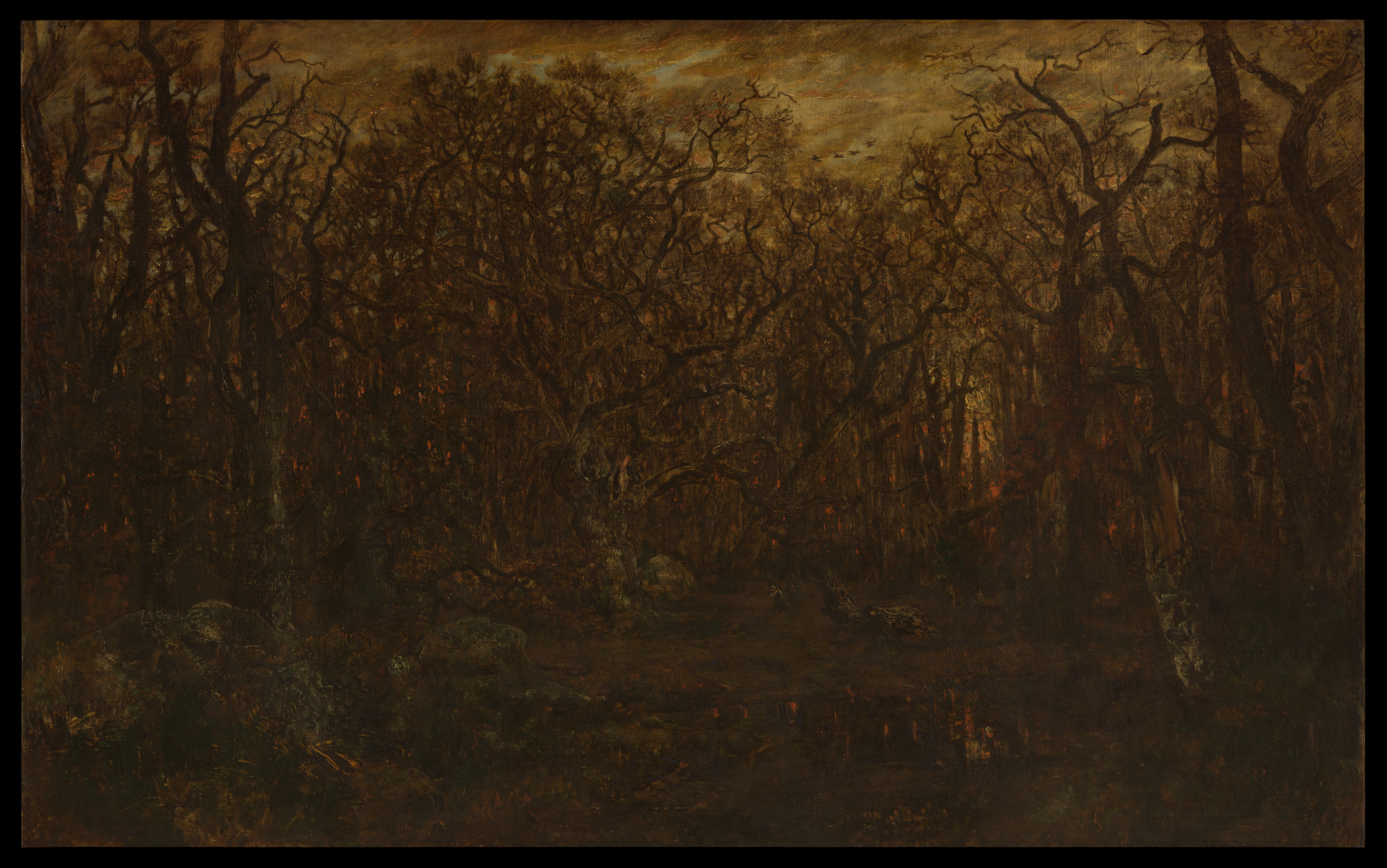
Théodore Rousseau — "The Forest in Winter at Sunset" (ca. 1846–67), public domain
Fire in the stacks.
In 48 BC, as Julius Caesar battled for control of Egypt, he ordered the ships in Alexandria’s harbor torched to block Ptolemy XIII’s fleet. The fire leapt from the docks to the city—and to the world’s most famous library.
Scrolls become ash.
No one knows exactly how much was lost. Ancient reports claim tens of thousands of papyrus scrolls—mathematics, philosophy, plays—vanished in smoke. Later writers blamed Caesar as the accidental arsonist of civilization.
The loss echoes on.
Centuries later, people still talk about what burned that night. Was it an accident? An act of war? Most likely: chaos, panic, and the luckless proximity of history’s treasure trove to a burning port.
The loss of Alexandria’s library is legend, but the fire that started it may have been an accident of war: Caesar ordered the docks burned to cut off his enemies. No one realized what else would catch fire.
