
The Thumbs Up/Down Myth
We picture Roman crowds deciding a gladiator’s fate with a dramatic thumbs up or thumbs down. Hollywood made it iconic. The Romans never did it—at least, not that way.
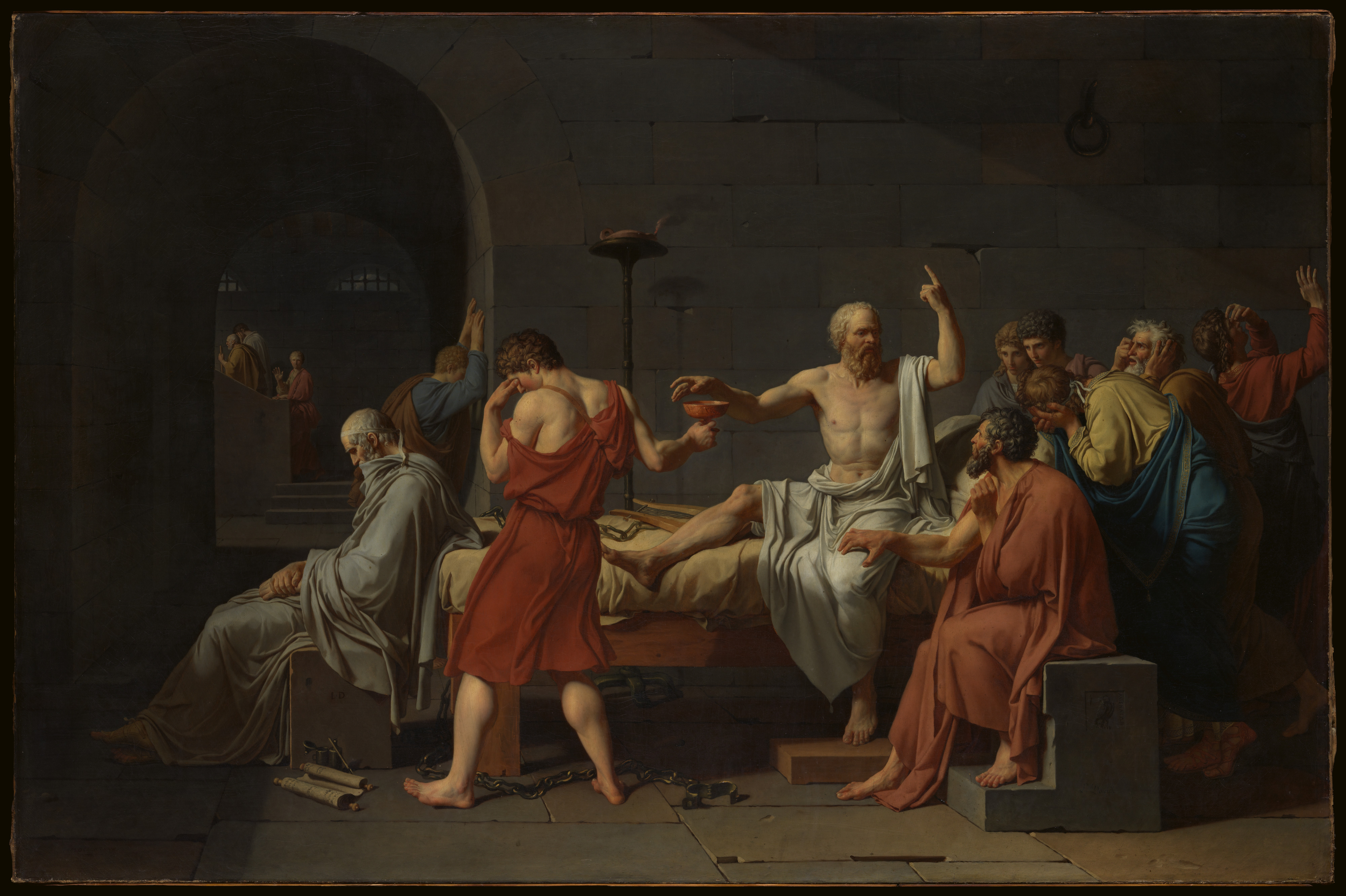
Jacques Louis David — "The Death of Socrates" (1787), public domain
Thumbs up? Thumbs down? Not so fast.
The crowd roars. The emperor weighs in. A thumb points upward—salvation, right? A thumb drops—doomed. That’s how movies sell it. But there’s no ancient source that spells it out so neatly.
The real gestures were more cryptic.
Roman writers like Juvenal and Suetonius describe gestures, but the details are lost in translation. Some scholars argue 'pollice verso'—literally, 'with turned thumb'—meant death. But it’s unclear if that meant up, down, or even sideways. Ancient art sometimes shows a fist with the thumb tucked in to spare a life.
How did the myth take root?
The modern gesture seems to have started with an 1872 painting—'Pollice Verso' by Jean-Léon Gérôme—showing the crowd with downward thumbs. Hollywood, starting with 'Ben-Hur,' copied the motif. Today we all make the gesture, but it’s Victorian theater, not Roman reality.
Ancient texts describe gestures but never specify the 'thumbs down = death' rule. Evidence suggests a closed fist or thumb pressed in signaled mercy, while a turned or pointed thumb could mean kill. The whole up/down idea is a modern invention.
