
The Thumbs Down Myth
Picture the Colosseum: the emperor signals 'thumbs down' and a gladiator dies. That iconic gesture? Pure Hollywood invention.
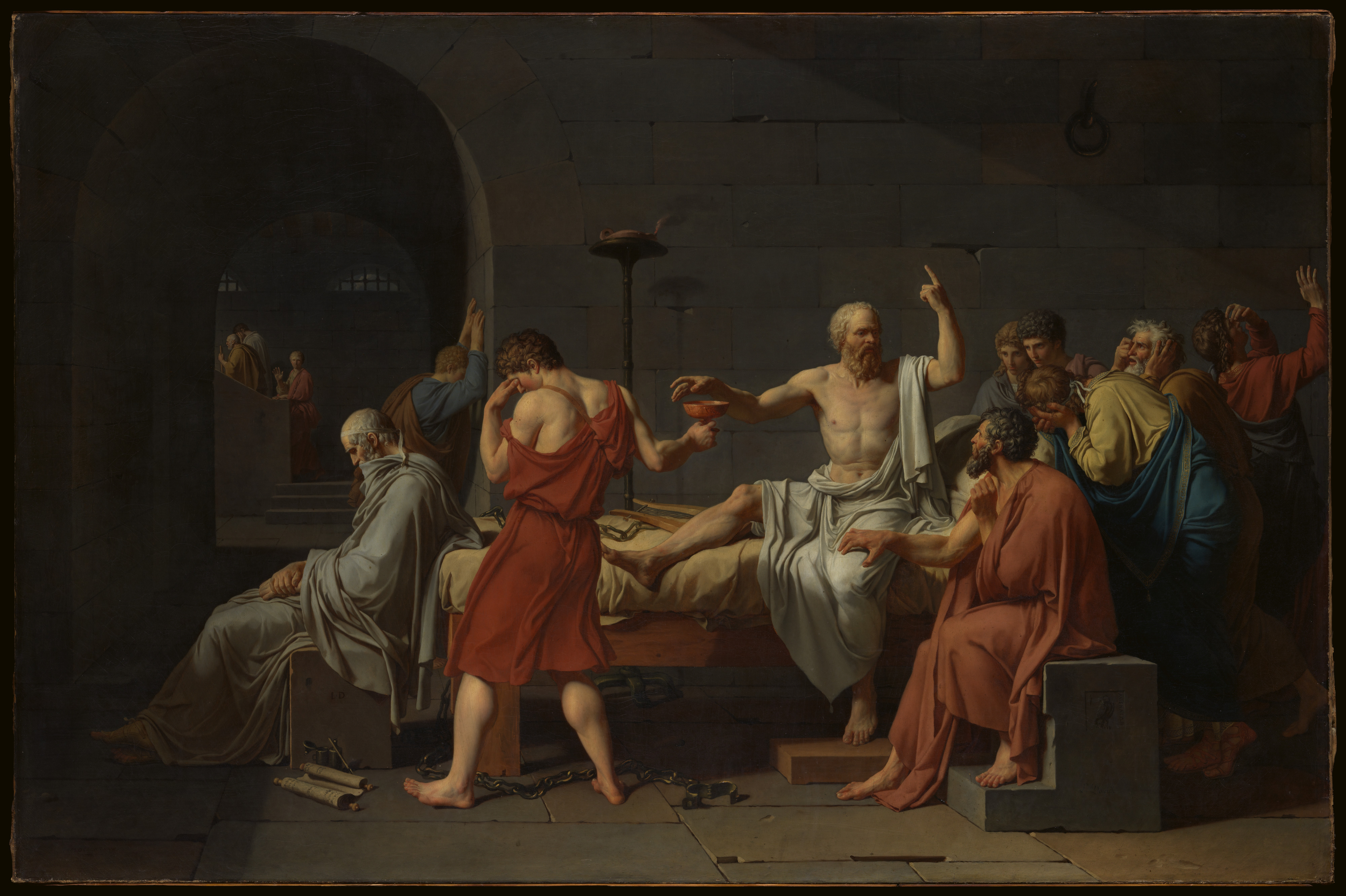
Jacques Louis David — "The Death of Socrates" (1787), public domain
Thumbs down means death, right?
We've all seen it: the emperor, perched above the arena, dramatically turns his thumb down. The doomed gladiator bows his head. The crowd roars. It's the most famous gesture in the ancient world—or so we think.
The real Roman sign was a mystery.
Roman writers don’t agree on the signal. 'Pollice verso'—literally 'with a turned thumb'—could mean anything: up, down, sideways, even a clenched fist. Sometimes, hiding the thumb in a fist was a sign of mercy. The deadly thumbs-down? Silent in every ancient text.
How did the myth start?
In the 19th century, artists like Jean-Léon Gérôme painted scenes of the arena with dramatic thumbs down, and Hollywood followed suit. The real gestures were probably subtle and context-specific—much harder for a movie hero to read from the sand.
Ancient sources never mention thumbs down as a death sentence. The gestures were more ambiguous—some describe a 'turned thumb' or even a closed fist. The crowd’s signals were complicated, and the emperor’s decision rarely hinged on a single, clear gesture.
