
Un Día Como Hoy·Roma Antigua·Late Republican Rome
On This Day: Cato the Younger's Final Stand
April 12, 46 BCE: Cato the Younger locks himself in a room in Utica. He chooses death over Caesar’s pardon.
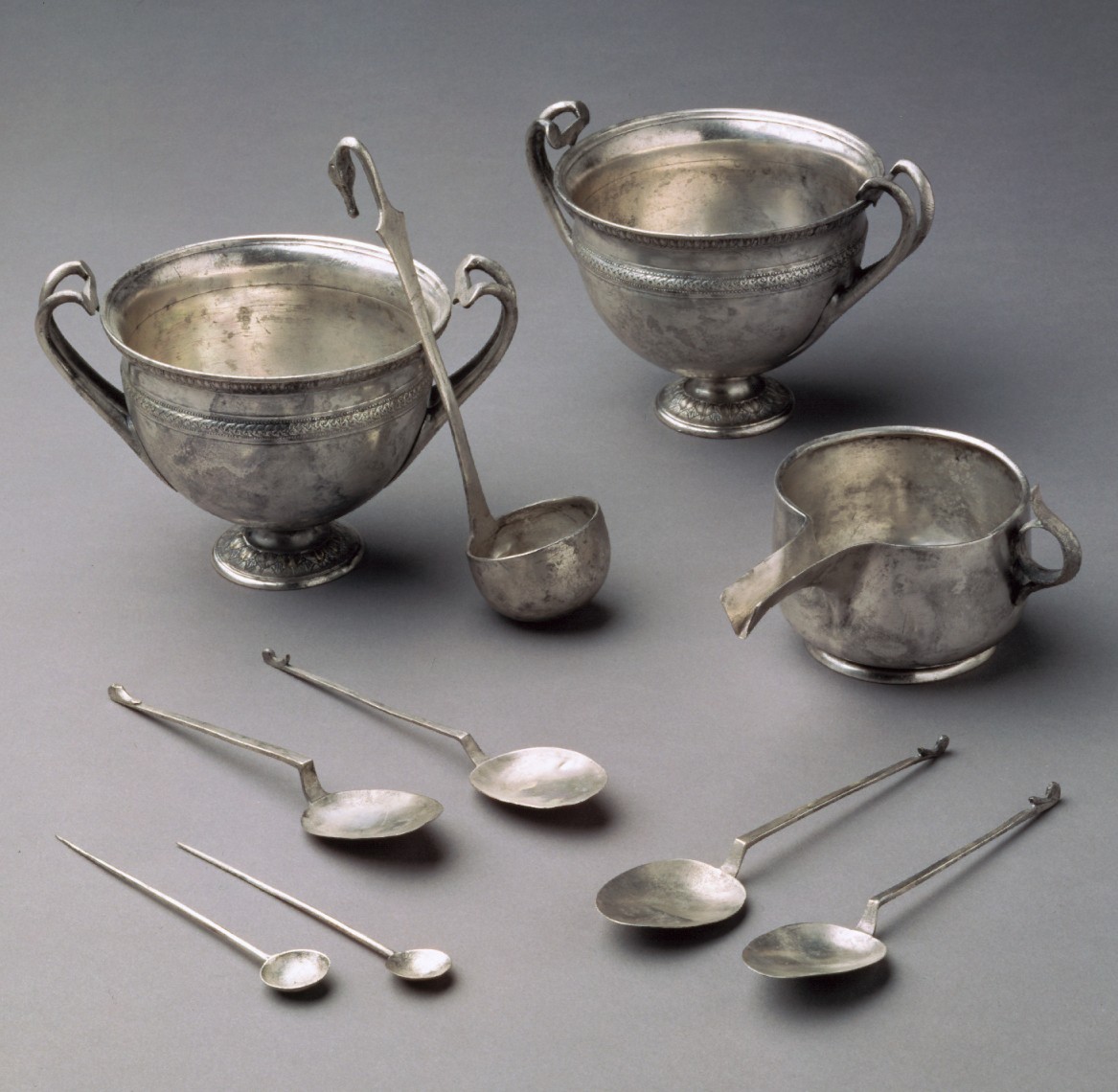
Unknown — "Tableware from the Tivoli Hoard" (mid-1st century BCE), public domain
One Roman against Caesar.
On this night in 46 BCE, as Julius Caesar’s legions flooded Africa, Cato sat reading Plato, then drew his sword and died by his own hand. He refused to live in a Rome ruled by a dictator—even one who offered mercy.
A death that wouldn’t fade.
For centuries, Romans argued about Cato—was he a moral hero or a stubborn fanatic? His suicide became a symbol, claimed by Caesar’s enemies and mourned even by some friends—a ghost at every empire’s banquet.
Cato’s suicide became legend: a last act of defiance that haunted Rome’s conscience and Caesar’s victory parade.
