
Greek Marble—Not Gleaming White
Picture Greek temples and statues: pure, brilliant white. Museum halls echo with it. But ancient Greece was a riot of color.
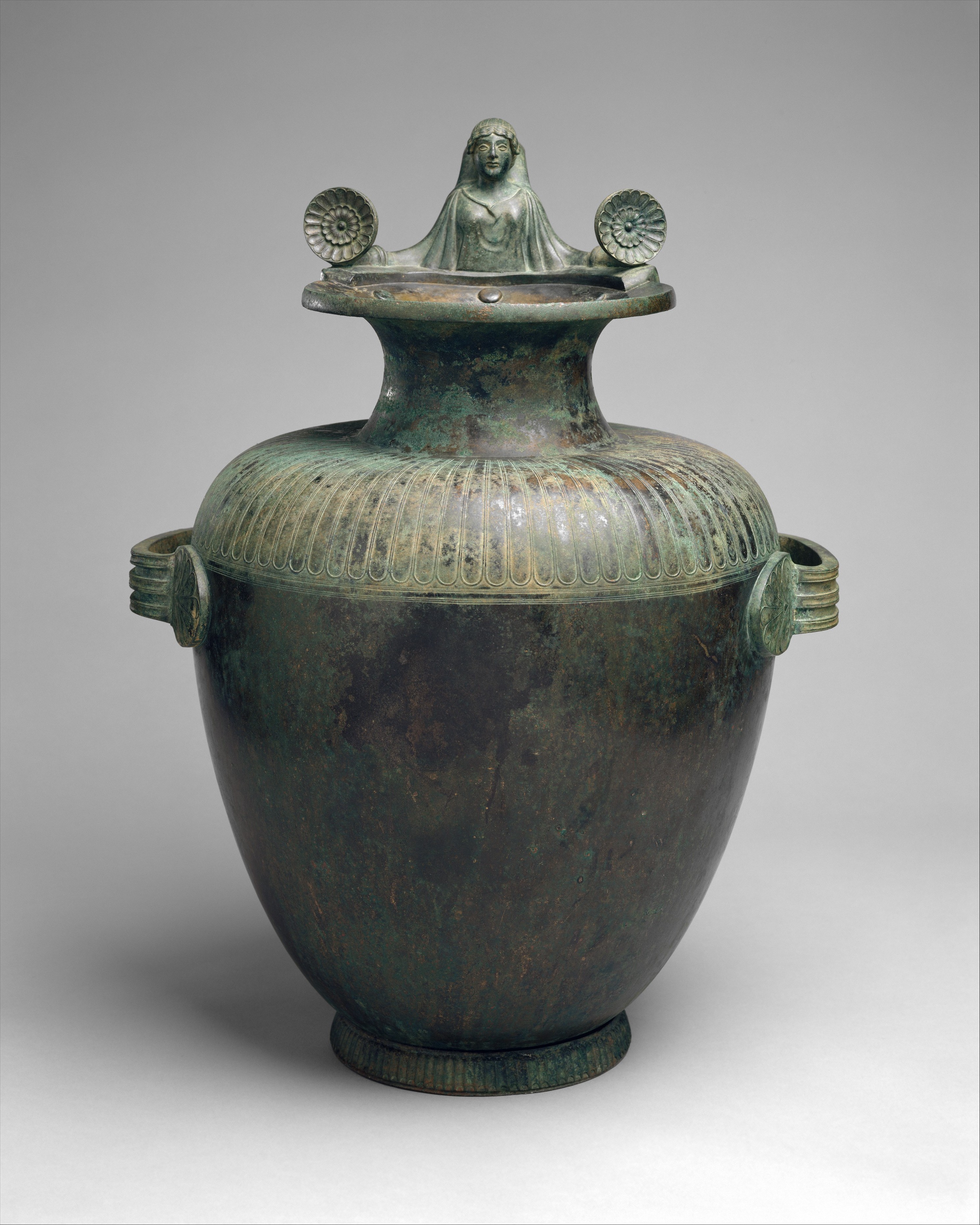
Unknown — "Bronze hydria (water jar)" (mid-5th century BCE), public domain
White marble? Not in ancient Greece.
It's a classic museum image: Greek statues and temples shimmering in white. Hollywood and textbooks taught us to see the ancient world in monochrome. But that's not what the Greeks saw.
A world bursting with color.
Archaeologists now use ultraviolet and chemical analysis to reveal paint traces on statues like the Peplos Kore and the Parthenon. Sacred buildings were striped, friezes blazed with blues and reds, and even the gods wore painted robes. The marble was just a canvas.
How did the myth begin?
During the Renaissance, artists like Michelangelo admired bare marble ruins—stripped by time and weather. They copied what they saw, and the cult of white marble was born. The colors faded, but the myth stuck.
Archaeologists have found microscopic traces of vivid pigment on the Parthenon and countless statues. Greeks painted their gods in bold reds, blues, and golds—nothing like the sterile marble we see today.
